Do Binaural Beats Actually Work?
 Save
Save The claim is seductive and it is everywhere. Put on headphones, play a specific frequency, and your brainwaves will follow it into focus, calm, deep sleep or something more exotic.
The underlying phenomenon is real and well documented. What has been built on top of it is considerably less so. Both of those things are worth understanding, because the gap between them is where most of the money is.
The actual phenomenon
Play a 200 Hz tone into the left ear and a 210 Hz tone into the right. You will not hear two tones. You will hear something that seems to pulse at 10 Hz, the difference between them.
That pulse does not exist in the air. Neither speaker is producing it. It is constructed in your brainstem, at the superior olivary complex, where input from the two ears first converges. The effect was described by Heinrich Wilhelm Dove in 1839, so this is old and uncontroversial acoustics.
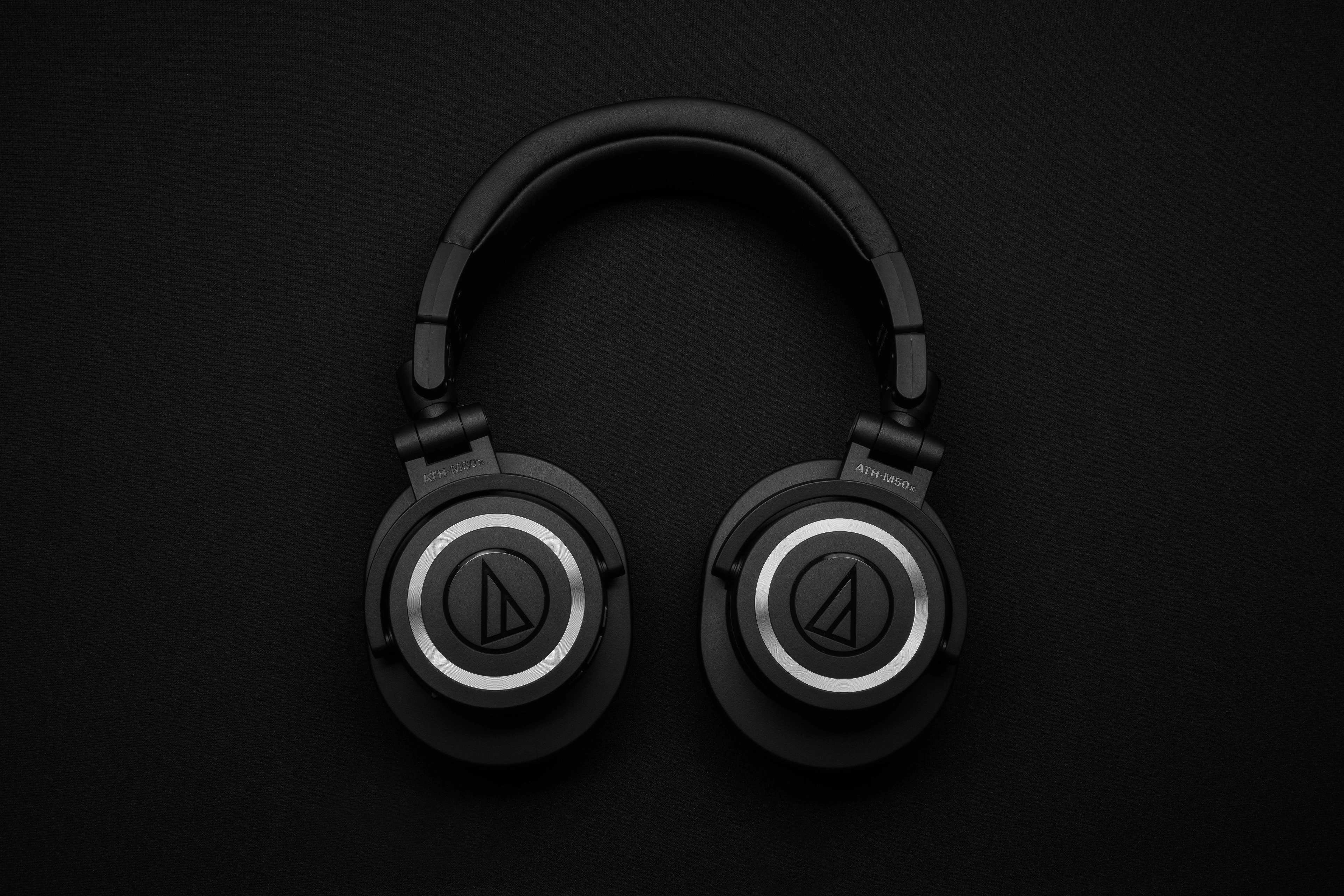
The requirement for headphones follows directly from the mechanism. Each ear must receive only its own tone. Through speakers, both ears hear both tones, they combine in the air instead of in the brainstem, and you get ordinary acoustic beating rather than the binaural effect.
The theory, and where it gets shaky
The reasoning behind the claims goes like this. Brain activity has characteristic rhythms: roughly 1 to 4 Hz for deep sleep, 4 to 8 for drowsiness and light meditative states, 8 to 12 for relaxed wakefulness, 13 to 30 for alert engagement. If you present a beat at 10 Hz, neural activity will entrain to it, and you can therefore select a mental state by selecting a frequency.
The problem is that each step of that chain is weaker than the step before it.
Entrainment to rhythmic sensory input is a genuine phenomenon and it is well established for visual flicker. Whether binaural beats produce meaningful entrainment is much less clear. Studies looking directly for it have produced inconsistent results, with some finding measurable changes in the target band and others finding little or nothing.
Even where entrainment appears, the leap to a mental state is a separate claim requiring separate evidence. Brain rhythms correlate with states, but nudging a rhythm does not reliably install the state that usually accompanies it. Correlation is doing a lot of unearned work in the popular version of this argument.
What the evidence actually supports
Anxiety. This is where the evidence is strongest, and it is still modest. Reviews of the literature find a small to moderate reduction in anxiety measures across studies, including in pre-surgical and pre-procedure contexts, which are useful because anxiety there is high, real and measurable. The effects are consistent enough to take seriously and small enough that the marketing language is unjustified.
Memory and attention. Results are genuinely mixed. Some studies find improvements, others find nothing, and a few find impairment. Effects appear to depend on the frequency used, the task, the duration, and the individual. There is no clean story here, and anyone telling you there is has read selectively.
Sleep. Evidence is thin and studies are small. Some report improved subjective sleep quality. Objective measures are less impressive, which is a familiar pattern in sleep research and one worth noting: how well people say they slept and how well they actually slept often diverge.
Pain. A few studies report reductions in perceived pain. The literature is small and this should be treated as preliminary.
The overall shape is a field with real signal, small effects, inconsistent replication, and studies that are usually underpowered. That is a fair description of an interesting phenomenon that has not yet earned its reputation.
The problem with the studies
Several methodological issues make the literature harder to interpret than the headline claims suggest.
Blinding is genuinely difficult. Binaural beats sound distinctive, so participants often know which condition they are in, and expectation shapes exactly the subjective outcomes most of these studies measure.
Control conditions vary enormously. Some studies compare against silence, some against unmodulated tones, some against music. These are not equivalent comparisons and they support different conclusions.
Protocols are wildly inconsistent. Carrier frequencies, beat frequencies, session lengths and volumes differ across studies with no standardization, which makes pooling results difficult and makes any specific claim about a specific frequency essentially unsupported.
Sample sizes are typically small, which inflates the effects that do reach publication.
The part the debate usually misses
Here is a question that rarely gets asked. If the entrainment mechanism is shaky but people report benefit, what is producing the benefit?
Several ordinary things, all of them real.
You put on headphones, which masks environmental noise. You sit still for twenty minutes, which you were otherwise not going to do. You are listening to a steady, low-information sound with no lyrics and no dynamic surprises, which is easy to sustain attention against. And you have formed an intention to relax or focus, which is not nothing.
None of that requires the entrainment theory to be true. All of it is worth having.
I think this matters more than the debate about brainwaves. Someone who listens to a binaural track daily and reports feeling calmer is not being fooled. They are getting a genuine effect through a more mundane route than advertised. The practice is doing the work. The frequency label is largely marketing.
That reframe also protects you from the expensive version, where the claim shifts from a modest anxiety effect to specific engineered states, and the price goes up accordingly.
Related techniques worth knowing
Monaural beats are two tones combined before they reach you, so the beating exists in the audio itself. They work through speakers and some research suggests they produce stronger measurable responses than binaural beats, since the brain does not have to construct anything.
Isochronic tones are a single tone switched on and off at a set rate. Sharper, more pronounced, no headphones needed, and preferred by some people for exactly that reason. Others find the pulsing intrusive.
If your interest is entrainment specifically, these are arguably better tools than binaural beats and they get a fraction of the attention.
Solfeggio frequencies and 432 Hz are a different claim entirely and should not be confused with this one. Those are about carrier pitch rather than beat rate, and the evidence there is weaker still. I covered it in 432 Hz versus 440 Hz.
How to use them sensibly
Use headphones, since without them you are not getting binaural beats at all.
Keep the volume moderate. Extended listening at high levels damages hearing, and no claimed benefit offsets that.
Match the beat rate loosely to the intent, lower for winding down and higher for alertness, while holding that lightly. The frequency-to-state mapping is the least supported part of this whole area.
Give it twenty to thirty minutes. Most studies use sessions in that range, and it also happens to be long enough for the ordinary mechanisms above to do their work.
Do not stack it with something demanding. If you are trying to relax, relax. Running a track underneath a stressful task and expecting it to neutralize the task is not how any of this works.
And do not pay premium prices. The effect, such as it is, does not scale with cost. Free tracks generated by the same method as expensive ones are the same method.
The floor
If you have epilepsy or any seizure disorder, ask your doctor before using rhythmic auditory or visual stimulation of any kind. This is the one genuine contraindication and it is worth respecting.
If you are treating an anxiety disorder, insomnia or chronic pain, binaural beats are at best an adjunct. The treatments with real evidence behind them for those conditions are not audio tracks, and using one to postpone the other is the actual risk here.
Clinical care, a stable home, steady income, and real support are the floor. Everything here is built on top of that floor.
What is worth carrying away is this. The acoustics are real, the anxiety evidence is modest and honest, and the brainwave story is doing far more marketing than science. If a track gets you to sit still for twenty minutes in quiet with your attention occupied, that is a real intervention. It just is not the one on the label.
Frequently asked questions
- What are binaural beats?
- They are a perceptual effect. Play a slightly different frequency into each ear, say 200 Hz on the left and 210 Hz on the right, and the brain produces the sensation of a third pulsing tone at the difference between them, in this case 10 Hz. That third tone is not present in the air. It is generated in the brainstem where signals from the two ears first combine, which is why headphones are required.
- Do binaural beats actually work?
- There is modest evidence for effects on anxiety and some evidence for effects on memory and attention, but the literature is inconsistent, the studies are typically small, and results vary considerably by protocol and outcome. The effects that appear are real but far smaller than the marketing suggests. Anyone promising a specific mental state on demand is well ahead of the data.
- Do you need headphones for binaural beats?
- For true binaural beats, yes. The effect depends on each ear receiving a different frequency, so speakers do not produce it because both ears hear both tones. Isochronic tones and monaural beats are related techniques that do work through speakers, since the pulsing is present in the audio itself rather than constructed in the brain.
- Are binaural beats safe?
- For most people, yes, at reasonable volume. The exception that matters is epilepsy or a seizure disorder, where any rhythmic sensory stimulation warrants a conversation with your doctor first. Volume is the more common risk: extended listening at high levels damages hearing, and no claimed benefit is worth that trade.