Digestive Bitters: Benefits, the Science, and How to Use Them
 Save
Save For most of human history, a meal began with something bitter. A few drops of a dark, herbal tincture on the tongue; a bite of chicory or dandelion greens; a small glass of an aromatic aperitif before dinner. The practice now has a tidy modern name. Digestive bitters, and it is enjoying a quiet revival on supplement shelves and behind cocktail bars. The pitch is appealing: a dropper of concentrated bitter herbs before you eat, and your digestion supposedly wakes up.
There is a real mechanism underneath the marketing, and it is genuinely interesting. Bitterness is not merely a flavor. It is a signal your body is built to detect and respond to, from the tip of your tongue all the way down into your gut. But there is also a gap between that mechanism and what has actually been proven in people, and most articles on this topic quietly step around it.
This guide does not. We will walk through what digestive bitters are, the bitter-taste-to-vagus pathway that explains how they might work, what the evidence genuinely supports and where it runs thin, how and when to take them, the common herbs involved, and, just as importantly. Who should leave them alone. No cure claims. Just the mechanism, the honest evidence, and a practical way to think about it.
What are digestive bitters?
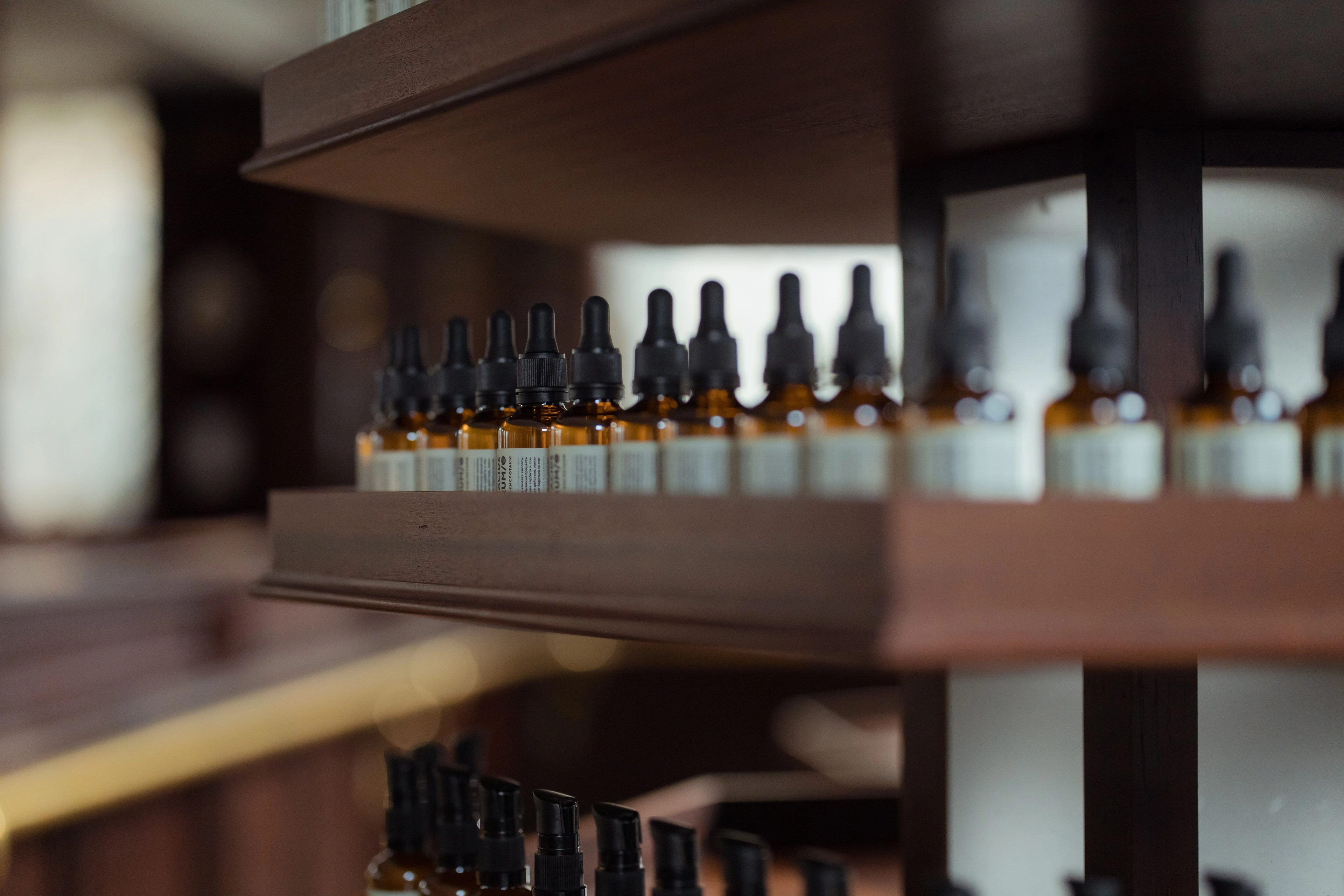
Digestive bitters are concentrated preparations, usually alcohol- or glycerin-based tinctures, made from bitter-tasting plants: the roots, barks, leaves, and peels traditionally used to stimulate appetite and ease the discomfort of a heavy or sluggish meal. The bittering agents are real plant chemistry, not a marketing abstraction: the secoiridoid compounds in gentian, the sesquiterpene lactones in artichoke and dandelion, the pungent oleoresins in ginger.
The category spans a wide spectrum. At one end sit the classic single-herb tinctures of Western and traditional herbalism. At the other are the amari and aperitifs woven into European food culture. Angostura, Campari, and their cousins, which encode the same instinct inside a social ritual. What unites them all is the deliberate use of bitterness at the edges of a meal, on the theory that the bitter signal itself does something useful for digestion.
That theory is old. What is new is that we can now describe, in molecular terms, at least part of why bitterness might matter to the gut.
How bitters work (the bitter-taste to vagus connection)
Bitterness is a signal, not just a taste
Your sensitivity to bitterness is not an accident. Bitter compounds are detected by a family of receptors called TAS2Rs. Type 2 taste receptors. Of which humans carry roughly 25 different subtypes. In evolutionary terms, bitterness often flagged a potential toxin, so the body learned to notice it sharply and react. That built-in reactivity is exactly what bitters aim to borrow.
From the tongue toward the vagus nerve
When bitter compounds land on the TAS2R receptors of your tongue, they trigger far more than a grimace. The sensory signal travels toward the brainstem, and the body begins preparing the digestive tract for incoming food. What herbalists have long called the “bitter reflex.” Classic physiology describes a rise in salivation and a priming of gastric acid and digestive enzyme output. Much of this “get ready to digest” activity runs through the parasympathetic nervous system, and in particular the vagus nerve, the long, wandering nerve that links the brainstem to the gut and governs the body’s rest-and-digest state. If you want the wider picture of that nerve and how to work with it, see our guide on how to stimulate your vagus nerve.
The receptors are not only in your mouth
Here is the finding that reframed the science over the last fifteen years: TAS2R receptors are not confined to the tongue. They are expressed throughout the gastrointestinal tract, on the hormone-secreting enteroendocrine cells, on the acid-producing parietal cells of the stomach, and even on gut smooth muscle. When these extra-oral bitter receptors are activated, they can stimulate gastric acid secretion and influence the release of gut hormones such as cholecystokinin (CCK) and glucagon-like peptide-1 (GLP-1), messengers involved in digestion, gut motility, and the feeling of fullness.
Scientific Receipt, Bitter compounds act on TAS2R receptors found not only on the tongue but on the smooth muscle of the human gut, altering how the stomach relaxes to accommodate food. In small human tests, bitters delivered into the stomach made healthy volunteers feel satiated sooner, but the studies involved only a dozen or so people, and the authors caution that it is not yet proven the mechanism seen in lab models is what drives the effect in humans. Avau et al., Scientific Reports, 2015.
In plain terms: the “bitters wake up your digestion” story rests on a plausible, well-mapped biological foundation. The honest caveat is that most of this research maps the machinery. Showing the receptors exist and respond, rather than proving that a dropper of bitters before dinner reliably resolves real-world digestive complaints.
Potential benefits (and what the evidence really says)
This is where honesty matters most, because the distance between mechanism and proof is wide, and the internet rarely admits it.
The strongest realistic case for the benefits of digestive bitters covers two traditional uses: stimulating appetite, and easing mild, occasional indigestion, the bloating, fullness, and heavy feeling that can follow a large meal. These happen to be exactly the uses that Europe’s medicines regulator recognizes for gentian root. It is worth understanding precisely what that recognition does, and does not, mean.
Scientific Receipt, Gentian root’s intensely bitter secoiridoids, amarogentin and gentiopicroside, are thought to trigger a reflex rise in saliva and digestive secretions. Europe’s medicines regulator approves gentian only as a “traditional-use” remedy for temporary loss of appetite and indigestion, a category that, by its own definition, rests on more than 30 years of apparently safe use rather than proof from controlled clinical trials. European Medicines Agency, Committee on Herbal Medicinal Products, 2019.
“Traditional use” is a refreshingly candid label. It means: people have used this safely for a very long time, the effect is biologically plausible, and rigorous trials are lacking. That is the accurate status of most digestive bitters, not disproven, not proven, but grounded in long use and a sensible mechanism.
Where controlled trials do exist, they tend to test specific standardized herbal extracts rather than classic bitters tinctures. Artichoke leaf extract is the most studied example.
Scientific Receipt, Artichoke leaf extract, rich in bitter compounds, was tested against placebo in 247 adults with functional dyspepsia over six weeks. It produced a statistically significant improvement in dyspeptic symptoms versus placebo, but this was one standardized product studied in a diagnosed condition, which is not the same as evidence that any bitters tincture eases everyday indigestion. Holtmann et al., Alimentary Pharmacology & Therapeutics, 2003.
A separate randomized trial found that a combination of ginger and artichoke extract improved symptoms in people with functional dyspepsia within about two weeks, and ginger on its own has been shown to speed gastric emptying and antral contractions in healthy volunteers. Encouraging, but again, these are defined extracts at defined doses, studied in specific contexts, not blanket validation of the whole bitters category.
So the honest summary reads like this. The mechanism is real and well described. The traditional use is long and broadly safe. The modern clinical evidence is limited, mostly focused on particular extracts, and best described as emerging rather than robust. Bitters are a reasonable, low-risk thing to try for appetite and mild digestive discomfort. They are not a treatment for reflux disease, IBS, food intolerances, or any illness, and anyone promising that is overselling.
How to use digestive bitters
Timing
The traditional approach is to take bitters roughly 10 to 15 minutes before a meal, so the bitter signal reaches the digestive tract before the food does. Some people also reach for them after a heavy meal, to ease that overfull, sluggish feeling. Both fit the underlying logic of priming secretion and motility around the act of eating.
The one non-negotiable is taste. The proposed mechanism depends on actually tasting the bitterness. This is not a flavor to disguise. Capsules that bypass the tongue may skip the very reflex that makes a bitter a bitter in the first place.
Dose and form
Most commercial tinctures suggest a modest dose, often a single dropperful (roughly 1 to 2 mL), or anywhere from a few drops to a small teaspoon. Taken directly on the tongue or stirred into a little water. Start at the low end. More is not better here: the goal is a clear bitter signal, not a large volume of alcohol or herb. A splash of aromatic bitters in sparkling water before dinner is the same idea in a gentler, food-culture form.
If you would rather build the habit from whole foods, the same bitter principle lives in your produce drawer. Chicory, radicchio, dandelion greens, arugula, citrus peel, an approach we develop in detail in The Sovereign Kitchen. And for a structured, step-by-step way to fold the bitter ritual into your day, The Vagal Bitters Protocol lays out the full method, from choosing herbs to sequencing them around meals.
Common bitter herbs
A handful of plants appear again and again in digestive bitters formulas. Knowing them helps you read a label with clear eyes.
- Gentian (Gentiana lutea). The archetypal bitter, and one of the most intensely bitter plants known, its compound amarogentin remains detectable at extraordinary dilution. It is the classic choice for poor appetite and indigestion, and the herb behind the EMA’s traditional-use recognition above.
- Dandelion (Taraxacum officinale). Both root and leaf are bitter, and both have a long folk history as a digestive and a gentle support for bile flow.
- Artichoke (Cynara scolymus). Bitter leaf extracts are the best-studied member of the group, with the trial evidence in functional dyspepsia noted earlier.
- Ginger (Zingiber officinale). More pungent than classically bitter, but frequently paired with bitters; it has been shown to accelerate gastric emptying and to ease nausea.
Other regulars include burdock, orange and other citrus peels, wormwood, angelica, and yellow dock. Most commercial blends combine several, a primary bitter for the signal, an aromatic for flavor, and a carminative herb such as fennel or ginger to address gas.
Safety and who should avoid them
Bitters are generally well tolerated in the small, culinary amounts traditionally used, and that long track record is a large part of why regulators class them as low-risk. But “natural” is never a synonym for “for everyone,” and the very mechanism that makes bitters interesting. Stimulating stomach acid and gut activity, is exactly why some people should be cautious or avoid them entirely.
Talk to a doctor or pharmacist before using digestive bitters if you:
- Have a peptic ulcer, gastritis, or GERD / acid reflux. Increasing gastric acid can aggravate these conditions rather than help them.
- Have gallstones or a bile duct obstruction. Bitters that stimulate bile flow can pose a real problem here, and warrant medical guidance first.
- Are pregnant or breastfeeding. Several traditional bitter herbs, including wormwood and gentian, are not recommended in pregnancy, and safety data are limited.
- Take prescription medications. Bitters can shift the timing of stomach emptying, and the alcohol base of many tinctures can interact with certain drugs.
- Live with a chronic digestive diagnosis such as IBS or inflammatory bowel disease. Seek individualized advice rather than self-treating.
Two practical notes. Most tinctures are alcohol-based, which matters if you avoid alcohol. Glycerin-based versions exist as an alternative. And persistent or severe digestive symptoms. Unexplained weight loss, difficulty swallowing, blood, or ongoing pain, are never a job for bitters. Those are a reason to see a clinician promptly.
The bottom line
Digestive bitters occupy an honest middle ground, and that is precisely their appeal once the hype is stripped away. The biology is genuine: bitterness is a signal your body reads from tongue to gut, and stimulating it plausibly helps prime digestion. The tradition is long and broadly safe. The clinical proof, however, remains thin and mostly limited to specific extracts, so bitters are best understood as a low-risk, time-honored ritual worth trying for appetite and mild indigestion, not as a remedy for any disease.
If you want to fold that bitter ritual into a larger, calmer relationship with food and your nervous system, that is the whole idea behind the free guided reset, and it pairs naturally with the foods that calm the nervous system, where the same “prime the parasympathetic state” logic shows up on your plate.
A note on scope. This article is educational and is not medical advice. It is not intended to diagnose, treat, cure, or prevent any disease. Digestive bitters are a food-and-herbal tradition, not a proven therapy, and individual responses vary. Before adding them, especially if you are pregnant or breastfeeding, take medication, or live with GERD, ulcers, gallbladder disease, or any chronic digestive condition. Talk with a qualified healthcare professional. For persistent, severe, or alarming digestive symptoms, seek prompt medical care rather than self-treating.
Frequently asked questions
- What do digestive bitters actually do?
- They stimulate bitter-taste (TAS2R) receptors on the tongue and throughout the gut, which is thought to trigger a reflex increase in saliva, stomach acid, and digestive secretions to prime the body before a meal. The mechanism is well mapped in the lab; robust proof in healthy people is still limited.
- When should you take bitters?
- Traditionally about 10 to 15 minutes before a meal, so the bitter signal reaches the gut before food does. A few drops of tincture on the tongue, or a small amount stirred into a little water, is the usual approach. Some people also use them after a heavy meal to ease that overfull feeling.
- Do digestive bitters really work?
- For occasional indigestion and low appetite, long traditional use and a plausible mechanism are supportive, and specific standardized extracts such as artichoke leaf have some trial evidence in functional dyspepsia. But bitters are not a proven treatment for any disease, and individual results vary.
- Are digestive bitters safe?
- In the small culinary amounts traditionally used, they are generally well tolerated by healthy adults. Because they raise stomach acid and stimulate the gut, they may be a poor fit for people with ulcers, GERD or reflux, gallstones, or who are pregnant or on medications. Check with a clinician first.